

It is estimated that 1.5 billion people worldwide cannot resolve their justice problems. In Tanzania, this challenge is particularly acute for women.
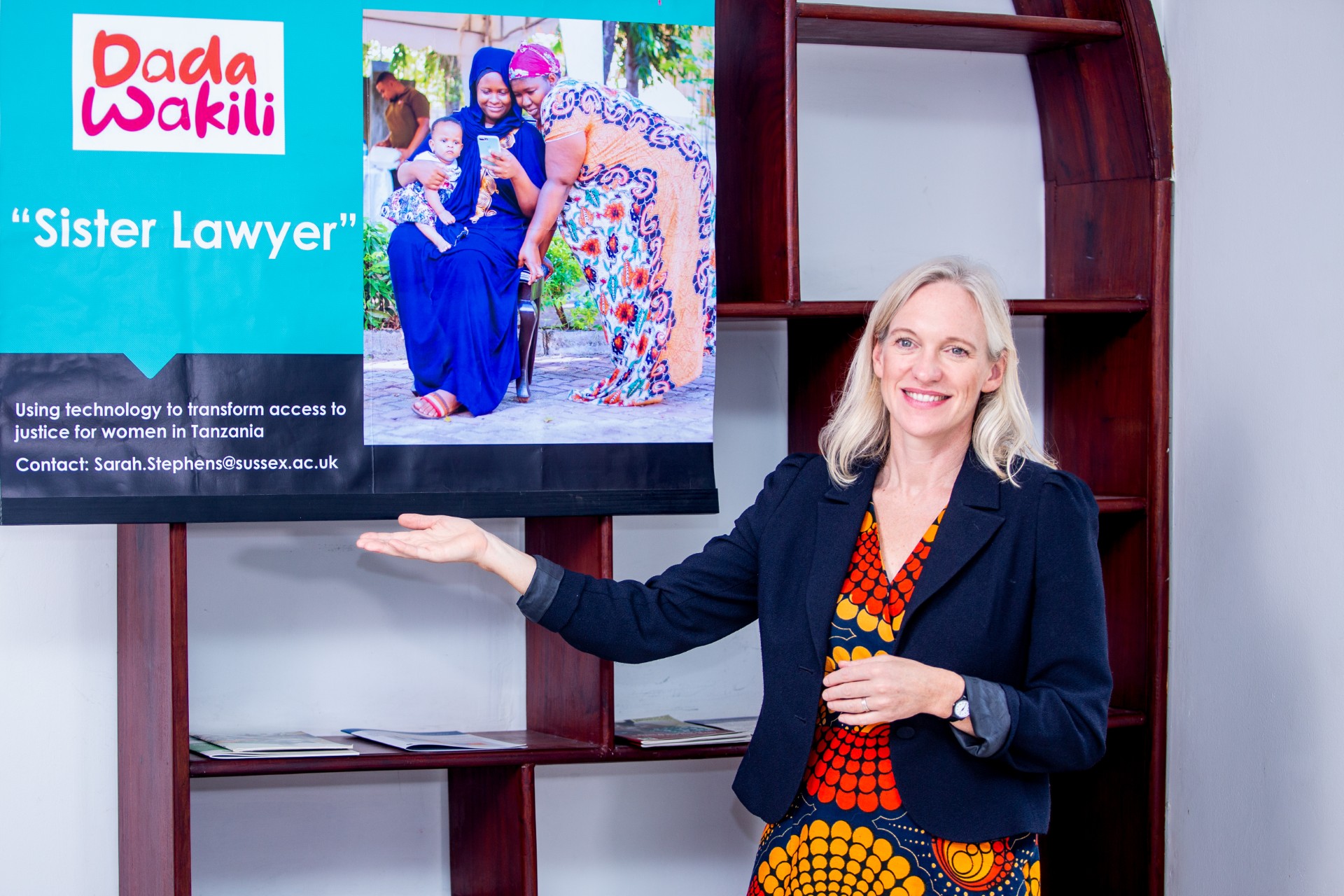
Dr Sarah Stephens, Founder and CEO of Dada Wakili
Women in Tanzania face compounding barriers of cost, distance, limited awareness of their legal rights, and the complexity of navigating plural justice systems that span customary, religious, and state law. For many women, the justice system is not merely inaccessible - it is invisible. Addressing this gap requires action on multiple fronts: strengthening the institutions that deliver justice and empowering the individuals, particularly women, who need to access it. In Tanzania, Irish Aid is supporting both approaches, funding complementary initiatives that work from different entry points towards the same goal: a more equitable and accessible justice system.
Dada Wakili: A Sister Lawyer in Every Woman’s Pocket
Dada Wakili, meaning ‘Sister Lawyer’ in Swahili, is a digital AI legal assistant designed to provide women in Tanzania with accessible, reliable legal information through WhatsApp, the platform they already use every day. Developed by Dr Sarah Stephens at the University of Sussex (photographed above) with support from the Irish Embassy in Tanzania through Irish Aid -the Government of Ireland's international development programme- Dada Wakili has developed from over a decade of research into the justice needs and advice-seeking behaviours of Tanzanian women.
The research revealed something important: women overwhelmingly seek advice from trusted female friends and family members before turning to formal institutions. Dada Wakili was designed to mirror this behaviour by offering the experience of speaking to a knowledgeable ‘digital sister’, available in both Swahili and English, who can help women understand their legal rights and explore their justice pathways. The tool is trained on Tanzanian legal frameworks and provides tailored support based on each woman’s specific situation, covering areas including land and property rights, family law, inheritance, and gender-based violence.
Supporting Survivors of Gender-Based Violence
A central focus of this work is supporting women who have experienced gender-based violence. For many survivors, the first barrier is not knowing what legal protections exist or how to access them. Dada Wakili provides immediate, confidential access to information about rights under Tanzanian law, available remedies, and pathways to support services. This work sits alongside and complements Irish Rule of Law International (IRLI)'s programme in Tanzania, which focuses on strengthening survivor-centred approaches within the criminal justice system, including training on trauma-informed practice in cases of sexual and gender-based violence.
Together, these initiatives address gender-based violence from both ends: equipping the justice system to respond more effectively, and empowering survivors with the knowledge they need to seek help.
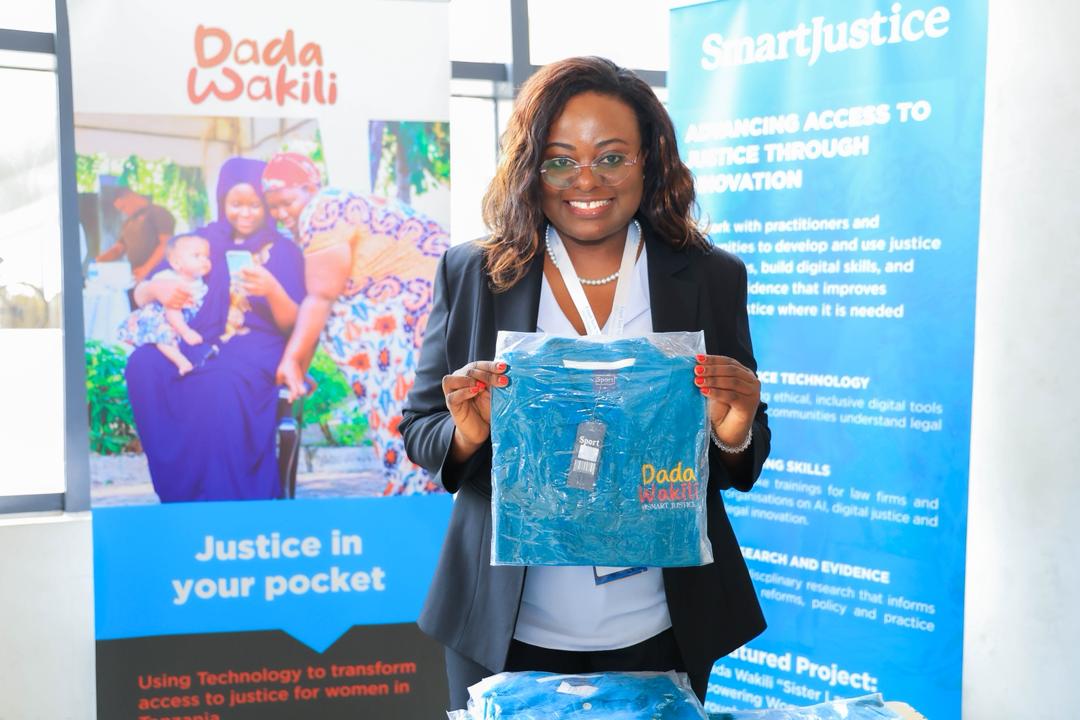
Dada Wakili Tanzania Director - Dr Cecilia Ngaiza
Locally Led, Collaboratively Delivered
Meaningful justice work must be rooted in local communities and led by local organisations. In Dar es Salaam, the Dada Wakili project partners with Women in Law and Development in Africa (WiLDAF) at the Judicial Centre in Temeke, working together to ensure that Dada Wakili is embedded within existing community-based legal support structures. WilDAF is also a valued partner of IRLI in Tanzania, having supported IRLI’s judicial training programme by bringing the victim’s perspective to discussions on survivor-centred justice. This shared partnership reflects a broader alignment: both initiatives are committed to working with and through Tanzanian civil society, rather than imposing external models.
The Dada Wakili project is also expanding into new regions. In early 2026, Dada Wakili launched in Manyara through a partnership with a community-based organisation, and then in Kigoma, extending access to legal information for women in some of Tanzania’s more underserved areas. These expansions are supported by researchers at the University of Dar es Salaam and builds on both local and international networks established over the past few years.
Shared Ambitions, Complementary Approaches
Irish Aid’s investment in justice in Tanzania is creating a connected ecosystem of support. IRLI’s work strengthens the institutional architecture of justice by investing in the training of criminal justice actors and social welfare officers in applying trauma-informed practices during the investigation, prosecution, and adjudication of SGBV cases and those involving vulnerable witnesses, while fostering cross-jurisdictional learning between Ireland, Northern Ireland, and Tanzania. Dada Wakili operates at the community level, ensuring that women have the knowledge and confidence to engage with these institutions. These are not competing approaches but complementary ones: women need both a justice system that is equipped to hear them, and the understanding of their rights that gives them the agency to come forward.
Technology offers new possibilities for this work. Mobile-first tools like Dada Wakili can reach women in communities that formal services struggle to access, providing a bridge between people and the justice institutions that serve them. As both IRLI and the Dada Wakili teams continue to explore how innovation can strengthen access to justice, there is a genuine opportunity for deeper collaboration by connecting institutional reform with community-level empowerment to build a more responsive and inclusive justice system in Tanzania.
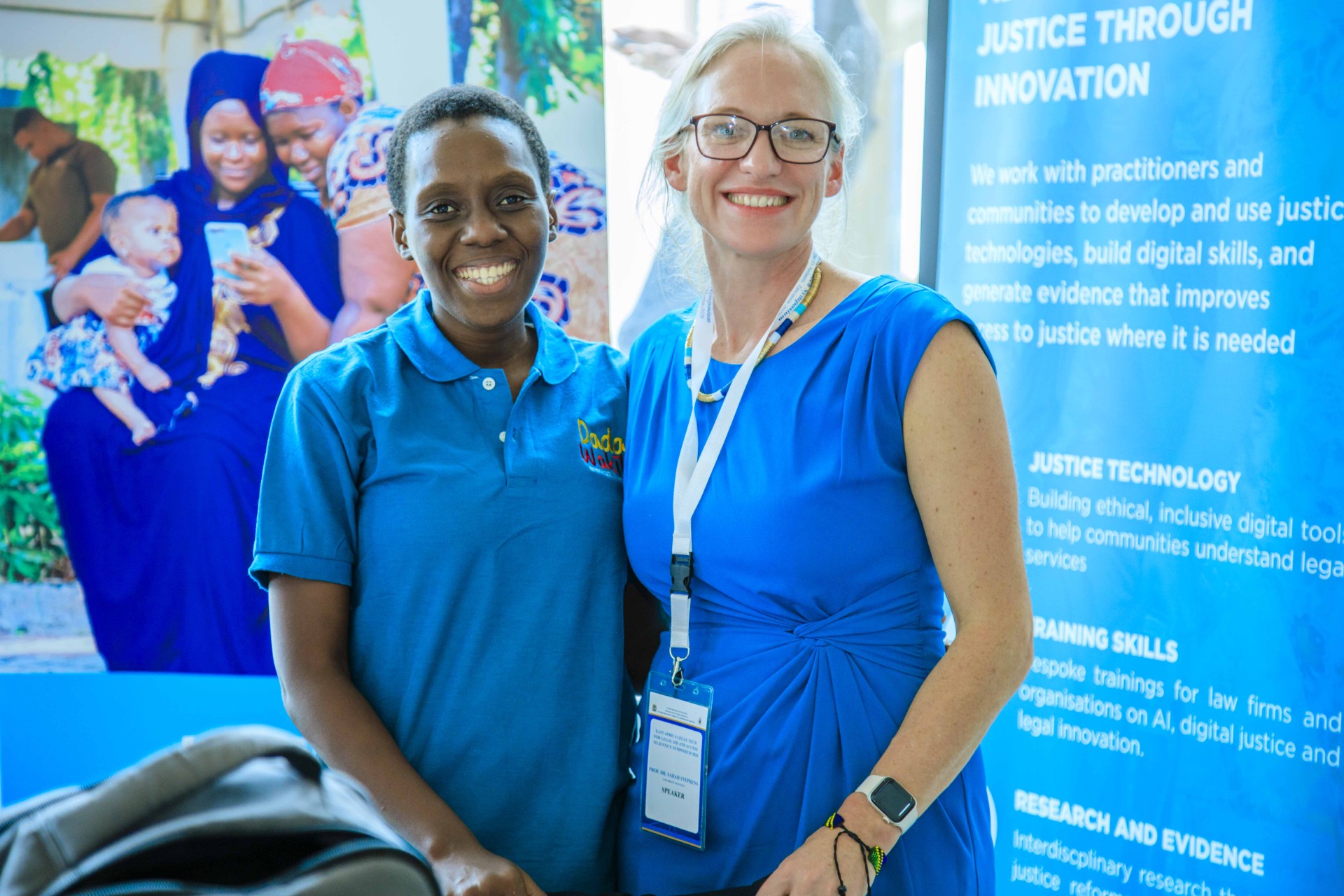
Dada Wakili intern Diana Robinson with Founder and CEO Dr Sarah Stephens
Looking Ahead
As Dada Wakili scales into new regions and continues to develop partnerships with WilDAF and community organisations across Tanzania, they will continue to learn, adapt, and share findings. Their recent participation in the Legal Tech for Legal Aid conference at the University of Dar es Salaam, contributes to a growing conversation about how technology can serve the justice needs of underserved communities in East Africa and beyond.
The challenges facing access to justice in Tanzania are significant, but so too is the commitment of those working to address them. With the continued support of Irish Aid and through partnerships between organistions like IRLI, WilDAF, and Dada Wakili, technology that is designed responsibly, deployed locally, and grounded in the lived experiences of the women it serves can play a meaningful role in closing the justice gap.
Words by Dr Sarah Stephens, Founder and CEO of Dada Wakili
About the Author
Dr Sarah Stephens is an Associate Professor of Legal Innovation at the University of Sussex. She works closely with Dr Cecilia Ngaiza at the University of Dar es Salaam to develop community-based solutions to support women in the justice system in Tanzania.
For more information, visit www.smartjustice.uk/Dadawakili.